
Circle of Transmission: The Living Loom
A Little Hadrian von Mynsicht Sampler – Part 2: The 1625 German edition of the ‘Aureum Seculum Redivivum’ and its English translation.
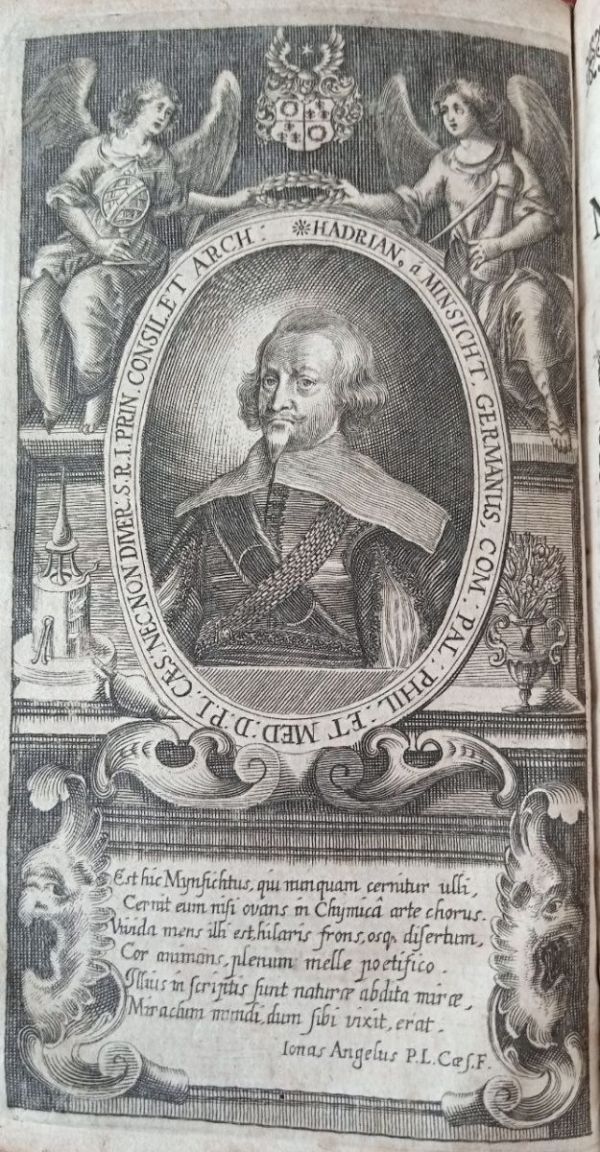
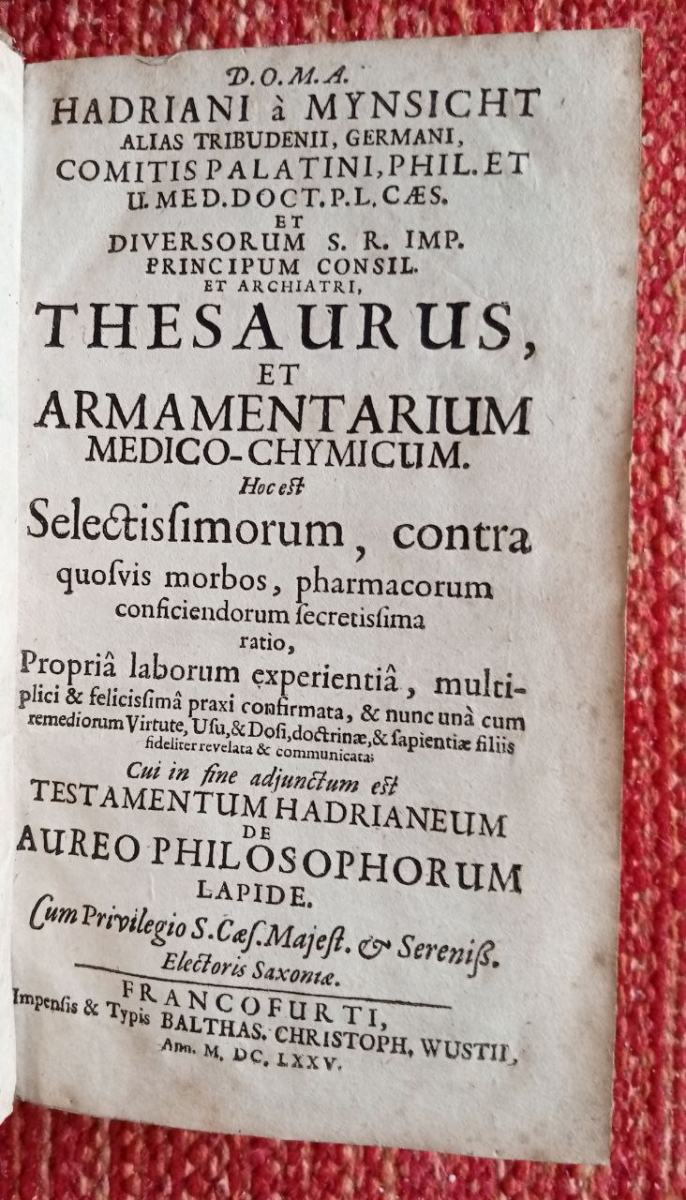
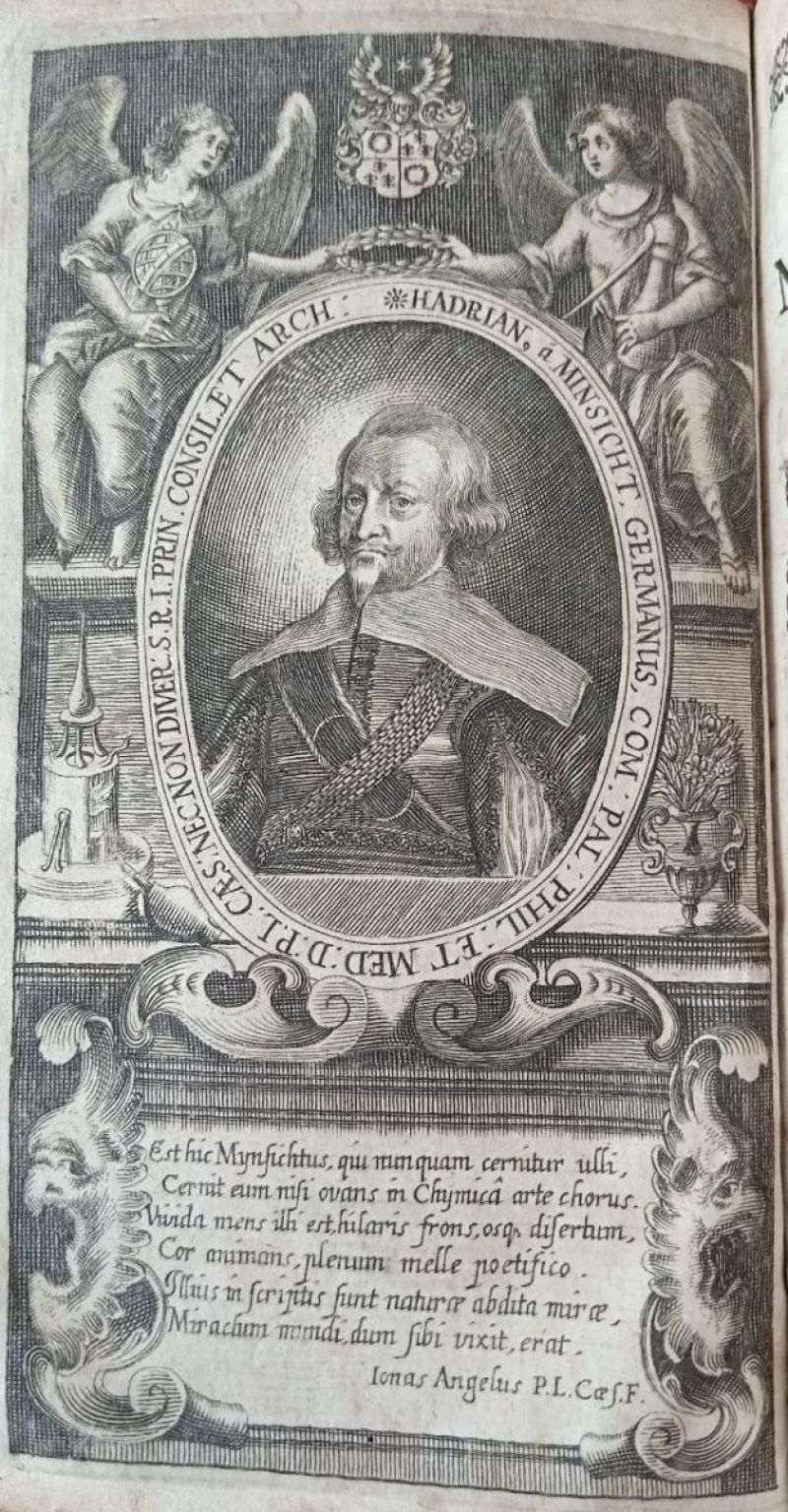
Hadrian von Mynsicht,
a Portrait facing the author’s forewords of his 1675
‘Thesaurus et Armamentarium Medico-Chymicum’.
*
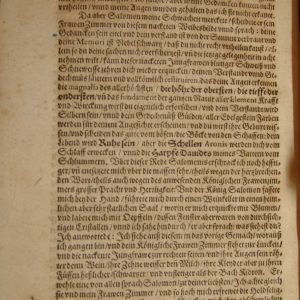
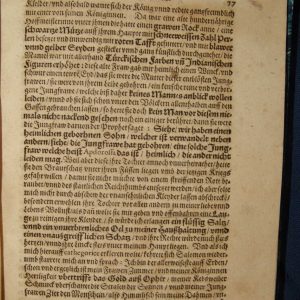
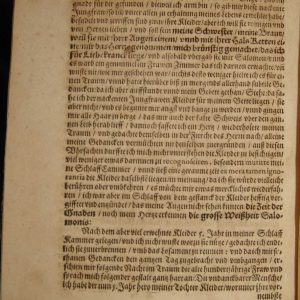
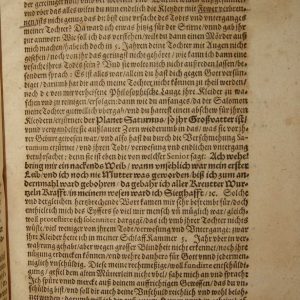
Today’s sharing from the Blue House of Via-HYGEIA is the second part of a sampler dedicated to the memory of Hadrian von Mynsicht and his alchemical and hermetic legacy. It offers a new English translation matched with a contextual introduction of the 1625 German edition of the ‘Aureum Seculum Redivivum‘ (‘The Golden Age Restored’).”
It appears as the second item in the ‘Dyas Chymica Tripartita, Das ist: Sechs Herrliche Teutsche Philosophische Tractätlein‘, published by Lucas Jennis in 1625.
Mynsicht is best known for his allegorical alchemical text ‘Aureum Saeculum Redivivum‘ (‘The Golden Age Restored‘), in which he crafted a symbolic alchemical poem depicting the Philosopher’s Stone’s creation, echoing the Paracelsian school’s esoteric style and concepts from works like ‘Archidoxis Magica’ (1591).
Did Mynsicht actually perform the Work he describes? The five/six year timeline matches traditional accounts (Nicolas Flamel’s decades of labor, Helvetius’s shorter but still protracted process) His 1631 pharmacopoeia demonstrates practical (al)chemical and spagyric competence. Yet the dream-vision genre allows strategic ambiguity—the laboratory might be entirely interior, or carefully concealed. To the watchful, he left some clues to decipher—the ‘Mountain of Fir Trees‘ (Berg der Tannen), Mynsicht’s alleged composition site of March 25, 1621—resists geographical identification, functioning instead as multivalent code:
Botanically, the fir (Tanne, Hebrew berosh) names the common conifer of Solomon’s Temple flooring (1 Kings 5:8), the humble wood walked upon, hidden beneath gold overlay—the overlooked matter bearing all glory. Berosh is sometimes translated as cypress or juniper, acknowledging scholarly debate about the precise tree.
Chemically, the fir bleeds resin, turpentine, tannin—the astringent preservative, the volatile solvent, the vegetable mercury that dissolves and fixes.
Architecturally, the mountain is quarry and forest, the raw material of sacred construction—Eden as lumberyard, the prima materia before the Work.
Linguistically, Tanne suggests tannin (the bitter principle), evokes the evergreen’s symbolic immortality, and hints at the density of undifferentiated chaos.
Theologically, Mynsicht as Hiram of Tyre sends his fir-text to the Solomon-reader, who builds the temple of understanding in the soul’s mountain.
The ‘locus amoenus’ is not escaped to but constructed from—the harshness transformed to sweetness, the tannin to balm, the forest to garden, the Unique made pleasant through labor.
Coming soon, ‘A Little Hadrian von Mynsicht Sampler – Part 3’ will offer selections from the ‘Thesaurus et Armamentarium Medico-Chymicum‘.
**
A CONTEXTUAL INTRODUCTION
The ‘Aureum Seculum Redivivum’ in its 1625 Editorial Context
Toward Re-integration within the Unique
*
I. The Dyas Chymica Tripartita:
A Rosicrucian-Alchemical Anthology
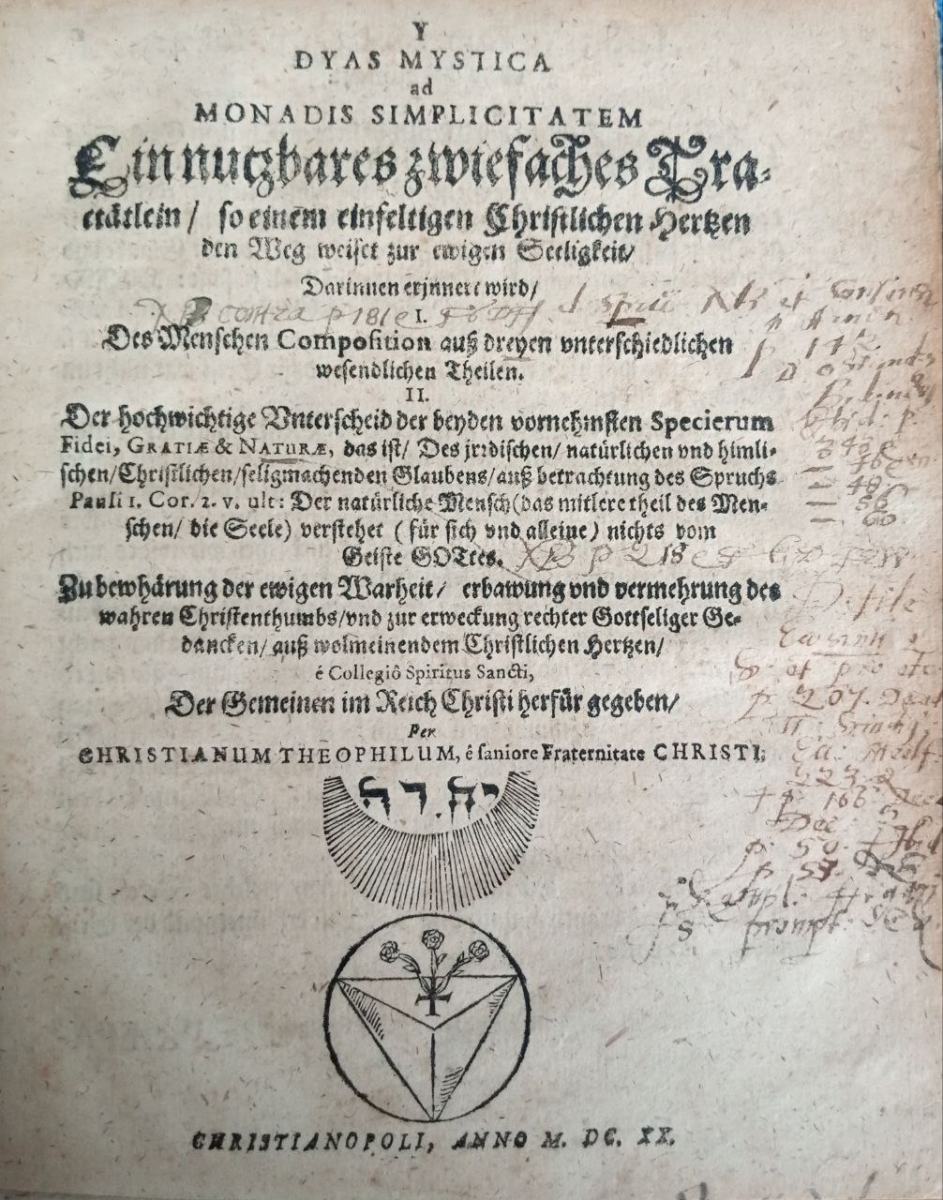
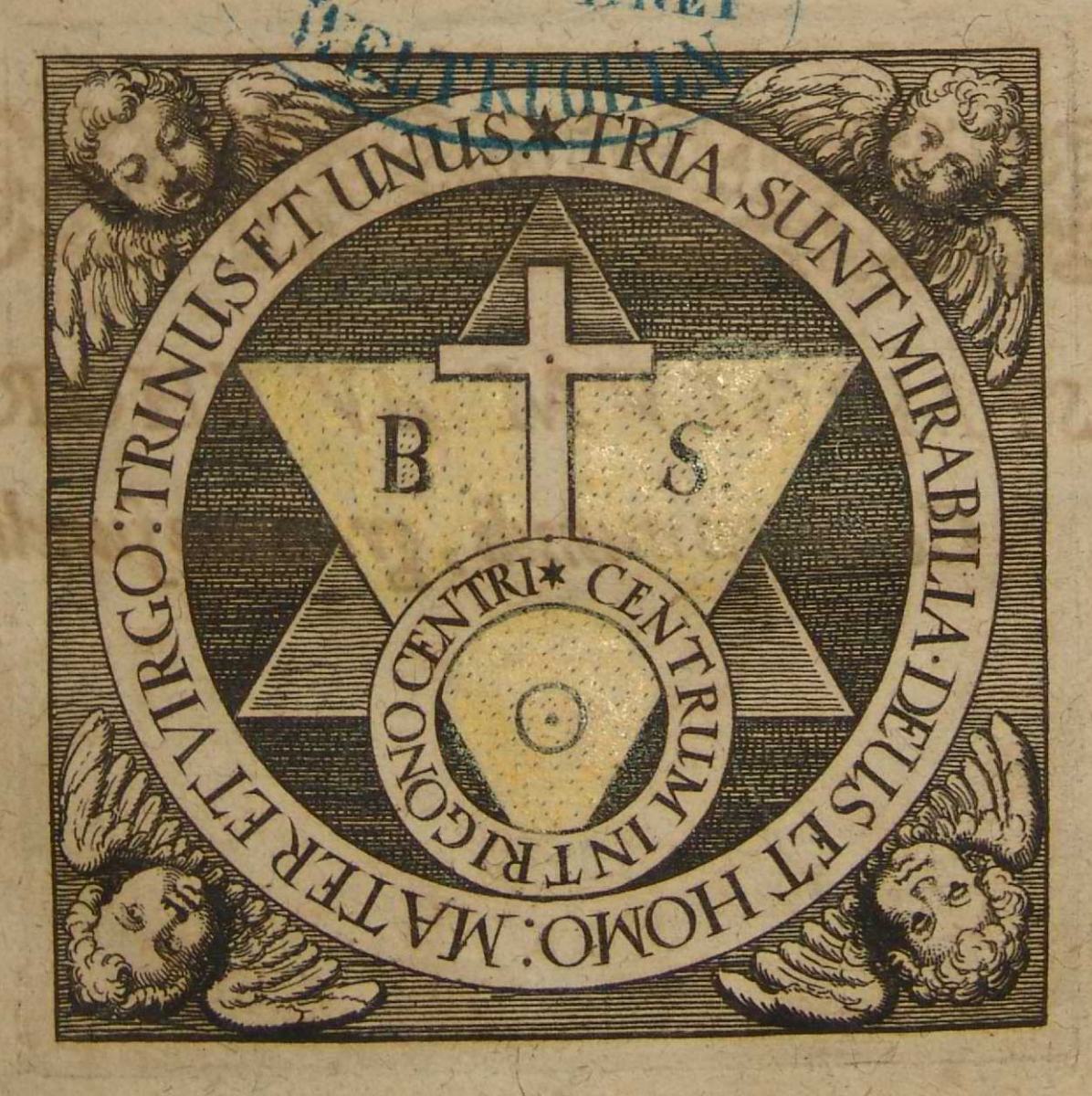
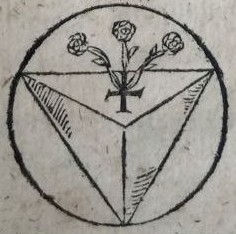
The theological geometry of the collection is anticipated in the 1620 ‘Y Dyas Mystica’ (a precursor volume), whose title page displays the emblem of the Three-in-One: a triangle inscribed in a circle, bearing a cross from which three roses bloom. This ‘Frater of the Three‘ symbol—unity differentiating into trinity, trinity resolved in unity—provides the hermeneutic key to Mynsicht’s later text: the ‘Triangle of the Center’ (Trigono centri) is not merely geometric but theological, the visual creed of the re-integrated soul.
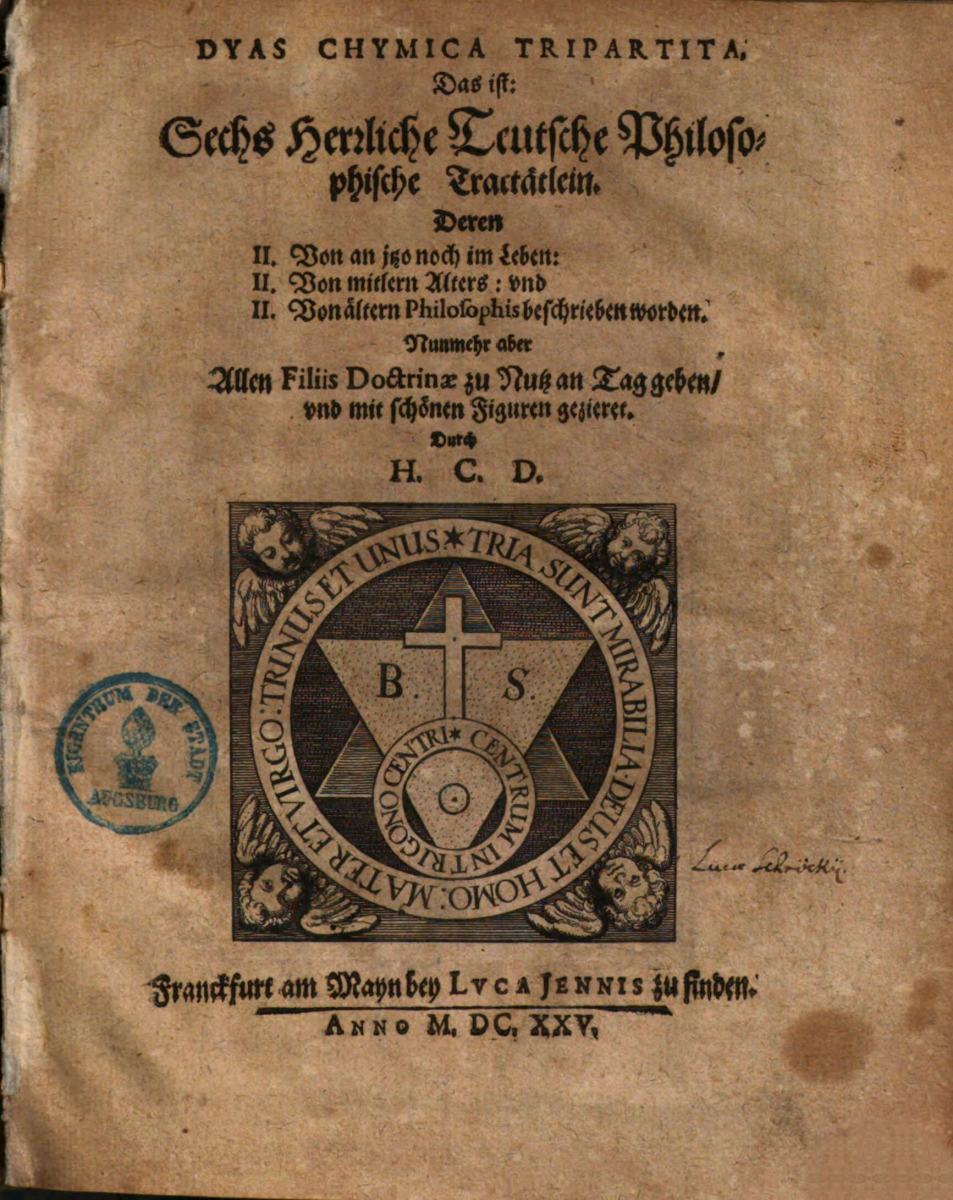
| Category | Treatises | Authors |
|---|---|---|
| ‘Von an jtzo noch im Leben’ (Of those still living) | 1. ‘Ein güldener Tractat vom philosophischen Steine’. 2. ‘Aureum Seculum Redivivum’ |
Anonymous Hinricus Madathanus (Mynsicht) |
| ‘Von mitlern Alters’ (Of middle age) | 3. ‘Vier Tractätlein’ (Four Little Treatises) 4. Lambspring |
Basilius Valentinus Lampert Spring (Lambsprinck) |
| ‘Von aeltern Philosophis’ (Of older philosophers) | 5. Vom philosophischen Steine (1423) 6. Liber Alze (The Book of Alze) |
Anonymous German philosopher Anonymous (c. 1420s) |
To this sextet, publisher Lucas Jennis (1590–1630)—the preeminent alchemical printer of his era—appended the ‘Hermetico-Spagyrisches Lustgärtlein’ (The Hermetic-Spagyric Pleasure Garden) of Johann Daniel Mylius, containing 160 emblematic roundels of alchemical philosophers
*
II. Lucas Jennis and the 1625
Alchemical Publishing Moment
-
The ‘Dyas Chymica Tripartita’(German, six treatises)
-
The ‘Musaeum Hermeticum’ (Latin, nine treatises, including Latin versions of the ‘Aureum Seculum’ and others)
-
The ‘De Lapide Philosophico’ (separate edition of the Lambspring with 15 engravings)
This triplicate publication strategy—German vernacular for native adepts, Latin for the international republic of alchemy, illustrated editions for the visually-minded—demonstrates Jennis’s systematic commercial and spiritual mission: to disseminate a coherent corpus of Rosicrucian-alchemical wisdom at precisely the moment when the Rosicrucian furor (1614–1624) had created unprecedented demand for authentic fraternal teachings
The Frankfurt center was strategic: the city hosted the Book Fair, commanded pan-European distribution networks, and maintained connections to the Palatinate court—epicenter of Protestant esotericism. Jennis’s copperplate engravings, possibly involving Matthäus Merian the Elder, established a visual language of alchemy that would influence emblem books for centuries
*
III. Hadrian von Mynsicht:
Physician, Alchemist, Theosopher of the Unique
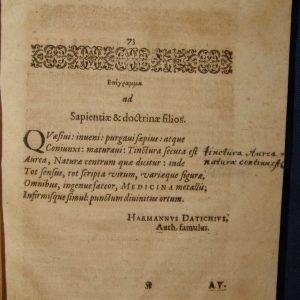
The pseudonym ‘Madathanus‘ is an anagram of ‘Hadrianus a Mynsicht‘ (with letters rearranged: H-A-D-R-I-A-N-U-S → M-A-D-A-T-H-A-N-U-S). The ‘Theosophus’ designation signals his Paracelsian-Christian orientation—divine wisdom (theosophia) rather than mere natural philosophy. The subsidiary pseudonym ‘Harmannus Datichius’ (appearing in the dedication poem) similarly anagrammatizes elements of his name
| Work | Date | Genre | Significance |
|---|---|---|---|
| ‘Aureum Seculum Redivivum’ | 1621/1625 | Theosophical allegory | Visionary narrative of the Great Work as re-integration |
| ‘Thesaurus et Armamentarium Medico-Chymicum’ | 1631 | Pharmacopoeia | Practical (al)chemical & spagyric medicine, including first preparation of tartar emetic |
IV. Structure and Inner Meaning of the ‘Aureum Seculum’:
A Manual of Re-integration
A. Narrative Structure: The Dream-Vision as Descent and Return
| Sequence | Episode | Alchemical Stage | Mode of Re-integration |
|---|---|---|---|
| 1. Invocation | Prayer for wisdom | Preparation of the vessel | Tawḥīd al-Rubūbiyya—recognition of the Unique as source |
| 2. Dream Entry | Solomon’s appearance | Conjunction of opposites | The descent into multiplicity—the Many as veil |
| 3. The Women’s Chamber | 60 queens, 80 concubines, virgins innumerable | Multiplicity of false paths | Discernment—rejecting the many for the One |
| 4. The Naked Virgin | Nature unveiled, wounded, bleeding | Nigredo—the prima materia in putrefaction | Al-Aḥad in agony—the Unique suffering in division |
| 5. The Old Housekeeper | Saturn’s mother, the bridal treasure | Saturnine lead, the hidden seed | The ancestor of return—time as servant of eternity |
| 6. The Gray Casket | The two treasures: Lunar diamonds, Solar rubies | Separation of pure from impure | Duality revealed as unity’s self-differentiation |
| 7. The Eight Coals | Vulcan’s fire, the north and south winds | Ignition of the philosophical fire | The fire that burns without consuming—fanāʾ |
| 8. The Eclipse and Rainbow | Black sun, then peacock’s tail | Nigredo → Citrinitas | Extinction and subsistence—fanāʾ wa-baqāʾ |
| 9. The Pleiades | Seven stars, yellow rays, morning red | Rubedo—the dawn of perfection | Waḥdat al-Shuhūd—unity of witness |
| 10. Epilogue | The Spirit of the Lord, the great secret | Quinta Essentia—the Stone achieved | Waḥdat al-Wujūd—unity of being, re-integration complete |
B. Theosophical Structure: The Three Principles and the Unique
| Principle | Figure in Text | Color | Stage | Relation to Unique |
|---|---|---|---|---|
| Salt (Body) | The Old Housekeeper—ancient, fixed, containing the treasure | Gray/Black | Prima materia | The ground, the undifferentiated, al-Aḥad as hidden |
| Sulfur (Soul) | King Solomon—royal, fiery, the bridegroom | Red/Gold | Rubedo | The active presence, the revealing, al-Aḥad as manifest |
| Mercury (Spirit) | The Naked Virgin—volatile, watery, bleeding blood and water | White/Silver | Albedo | The mediator, the possibility of return, al-Aḥad as bridge |
C. Christological Structure: The Redemption of Nature as Re-integration
V. Key Sequences and Their Esoteric Significance:
The Path of Return
1. The Numerical Signature (1612): The Unique in Number
-
Chronogram: The Roman numerals M-D-C-X-I-I (1000+500+100+10+1+1) = 1612
-
Letter count: ‘Two dead [Roman numerals] and seven living [letters]’—the seven vowels/consonants of MYNSICHT
-
Gematria: The 25th letter’s fifth part = E (5th letter); the 12th’s fifth part = I (or M = 12th letter in modified count)
2. The Five/Six Year Pattern: The Temporality of Return
-
The six days of Creation (Genesis 1)—the Unique’s self-unfolding.
-
The sixth generation of Rosicrucian transmission (per the ‘Fama Fraternitatis’).
-
The sephirothic structure: five lower (material) + one higher (spiritual) = Tiphereth, the Sun/Solomon.
3. The Saturnine Grandfather: The Ancestry of Unity
| Generation | Metal | Figure | Role in Re-integration |
|---|---|---|---|
| Grandfather | Saturn/Lead | The prima materia, the chaos, the heaviest element | The fall, the forgetting, the longest journey |
| Mother | Saturn’s daughter (unnamed) | The prepared matter, the virgin earth | The womb of return, the possibility of birth |
| Daughter | Mercury/Philosophical Child | The Stone, the redeemed nature | The accomplished re-integration, the Unique as achieved |
4. The Eight Coals in White Linen: The Fire of Return
-
The octave, the musical completion of the seven planets
-
The eighth day of Resurrection (beyond the seven of Creation)
-
The ‘fire of the Wise‘—not common combustion but philosophical ignition
-
The white linen: purity, the chaste vessel (Revelation 19:8)
*
VI. Takeaway Concepts: The Mynsichtian Synthesis of Re-integration
1. The Critique of ‘Vulgar Chemistry’: Interiorization as Path
2. The Erotic Mysticism of Nature: Desire as Compass
3. The Trinitarian Structure of Matter: The Unique in Three Masks
4. The Recovery of ‘Experience’ against ‘Authority’: Verification as Return
5. The Eschatological Urgency: The Unique as Future and Present
VII. Legacy and Reception:
The Thread of Re-integration
| Date | Edition/Adaptation | Significance |
|---|---|---|
| 1625 | ‘Dyas Chymica Tripartita’ (German) | Original anthology context—re-integration as fraternal transmission |
| 1625 | ‘Musaeum Hermeticum’ (Latin) | International dissemination—re-integration across boundaries |
| 1678 | ‘Musaeum Hermeticum’ (expanded Latin) | Canonical status confirmed—re-integration institutionalized |
| 1749 | ‘Musaeum Hermeticum’ (reprint) | Continued relevance—re-integration remembered |
| 1785 | ‘Secret Symbols of the Rosicrucians’ (German) | Rosicrucian revival; central text—re-integration renewed |
| 19th c. | Occultist translations (English, French) | Theosophical and Hermetic Order circulation—re-integration modernized |
| 20th c. | Jungian psychological readings | Archetypal alchemy (Psychology and Alchemy)—re-integration psychologized |
| 2020s | The Contemporary Reader’s reading | Re-integration within the Unique—re-integration planetary |
VIII. The 2020s Reading:
Re-integration within the ‘Unique’
| Previous Readings | 2020s Reading |
|---|---|
| Secrets for the elect | Transparency for the prepared—no occlusion, but discernment |
| Laboratory instructions | Ecological recognition—Nature as Virgin, wounded, awaiting |
| Christian eschatology | Planetary urgency—the Work as collective survival |
| Individual salvation | Species re-integration—the Unique as no longer ‘human’ alone |
-
The biosphere—Gaia, the wounded virgin, bleeding extinction.
-
The noösphere—collective consciousness, the dream we are all dreaming.
-
The theosphere—the divine ground, never absent, never separate.
IX. The Reader as Work: A New Symbol
X. Conclusion: The Book as Instrument of Return
Within the ‘Dyas Chymica Tripartita’, the ‘Aureum Seculum Redivivum’ functions as the ‘living voice‘ of the collection—the contemporary witness that validates the ancient texts. Where the Basil Valentine treatises offer technical instructions, and the medieval tracts provide historical pedigree, Mynsicht provides experiential testimony: ‘I have seen, I have prepared, I have completed‘.
The reader of 1625, encountering this volume at the Frankfurt Book Fair, would thus receive not merely information but initiation: a structured path from theory (the anonymous ‘Ein güldener Tractat’) through vision (‘Aureum Seculum’), through practice (Basil Valentine), through emblematic meditation (Lambspring, ‘Lustgärtlein’) to mastery (‘Liber Alze’). The ‘Filiis Doctrinae‘ (Sons of Doctrine) addressed on the title page are thereby constituted as a textual fraternity—readers united by shared hermeneutic labor, decoding the symbols, actualizing the Work.
In this sense, the’ Aureum Seculum Redivivum’ remains permanently contemporary: each reading reactivates the 1625 moment, each interpretation repeats the dream-vision, each understanding restores the Golden Age—now, here, for the prepared reader.
The ‘re-integration within the Unique‘ is not a new doctrine but the original recognition: that the Many was always the One’s self-disclosure, that the wound was always the opening, that the coating was always the protection of the treasure. ‘The winter is past, the rain is over and gone. The flowers appear on the earth; spring has come…’ (Song of Solomon 2:11-12)
The Unique has never been elsewhere.
*
BIBLIOGRAPHICAL NOTE
The 1625 ‘Dyas Chymica Tripartita’ survives in few copies (complete copies at Wolfenbüttel, Wellcome Library, NLM). The separate components circulated widely; the ‘Aureum Seculum Redivivum’ was reprinted at least 15 times before 1800. Modern scholars should consult: C.S. Picht, ‘Hinricus Madathanus’, Die Drei 7 (1927); Stanislas Klossowski de Rola, ‘The Golden Game’ (1997); and the Herzog August Bibliothek digital facsimiles.
For the Sufi-theosophical dimension of al-Aḥad and tawḥīd, see: William Chittick, The Sufi Path of Knowledge (1989); Ibn ʿArabī, The Bezels of Wisdom (trans. R.W.J. Austin, 1980); Henry Corbin, Creative Imagination in the Sūfism of Ibn ʿArabī (1969; orig. French 1958).
For re-integration as contemporary hermeneutic, see: Bruno Latour, Facing Gaia (2017); Timothy Morton, The Ecological Thought (2010); Evan Thompson, Waking, Dreaming, Being (2015)—each, in their way, repeating the Work.
*
And now
the text:
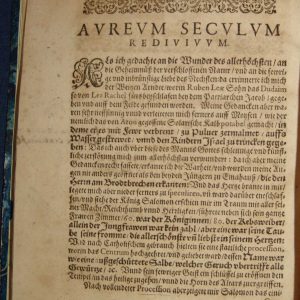
AUREUM SECULUM REDIVIVUM
The Golden Age Restored
That is:
The long-lost, vanished Golden Age,
Now risen again, pleasantly bloomed, and sown with sweet-smelling golden seed.
Discovered and revealed to all true lovers of wisdom and sons of doctrine
HINRICUS MADATHANUS, THEOSOPHUS, Physician and Bearer of the Golden Cross,
by the Grace of God,
In the Year 1625
*
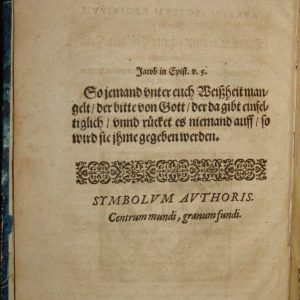
SYMBOL OF THE AUTHOR
Centrum mundi, granum fundi.
(The center of the world, the grain of the ground.)
*
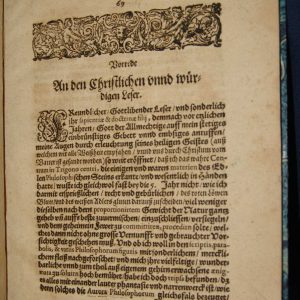
PREFACE
To the Christian and Worthy Reader
Pious and God-loving Reader, and especially you, sons of wisdom and doctrine: Accordingly, some years ago, God Almighty, through my constant, fervent prayer and diligent invocation, so widely opened my eyes by the illumination of His Holy Spirit (from whom we receive all wisdom, and who is sent to us through Christ from the Father) that I recognized the true Center in the Triangle of the Center, the unique and true material of the noble Philosophical Stone, and had it substantially in my hands. Yet for nearly five years I did not know how to profitably, rightly, and properly separate from it the blood of the red lion and the gluten of the white eagle, much less how to mix them according to the properly proportioned weight of Nature, perfectly and in the best way; how to enclose, seal, and commit them to the secret fire, and how to proceed. (Note: Gluten here means the binding principle or philosophical glue that unites opposites; associated with the White Eagle, Luna, Mercury in its purified form).
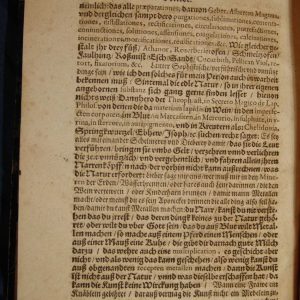
This indeed cannot happen without great reason and exercised caution. And although I have diligently and with remarkable industry searched in the writings, parables, and various figures of the philosophers, and have greatly exerted myself to solve their manifold, wonderful, and in part from their own brains grown enigmas, I have nevertheless found in reality that it is all pure fantasy and foolishness, as indeed the ‘Aurora Philosophorum’ likewise testifies—namely: that all preparations, as Geber, Albertus Magnus, and the like, together with their purgations, sublimations, cementations, distillations, rectifications, circulations, putrefactions, conjunctions, solutions, ascensions, coagulations, calcinations, incinerations, mortifications, revivifications, etc. Likewise their tripods, Athanor, reverberatory furnaces, smelting ovens, sand baths, heads, ashes, sand, cucurbits, pelicans, phials, retorts, fixatories, etc., are pure sophistical, deceitful, and useless things. This I myself, for my person, must honestly confess: since noble Nature, who lets herself be found very willingly in her own inborn substance, knows nothing of this.
Therefore Theophrastus, in his ‘Secretum Magicum de Lapide Philosophorum’, rightly says about those who seek the material of the stone in metals, in imperfect bodies, in blood, in marcasites, in mercury, in sulfur, in urine, in dung, in orpiment, and in herbs such as celandine, springwort, Ebhew, hyssop, etc.: It is all sheer roguery and thievery with which they seduce people, cheat them out of their money, consume and lose time uselessly and vainly, and all follow their own foolish opinions, which do not first consider what Nature requires. Dear, tell me: who must be in the mines of the earth, in wells, or are there people inside who dig ore, or distill urine from which one makes the Philosopher’s Stone?
Or do you think there are apothecaries inside who have all things for sale so that you can make the Philosopher’s Stone? You fool, can you not understand that you are in error, that not one of these things belongs to Nature?
Or would you be greater than God, that you would make metals from blood? Then make a man from a horse, or a toad from a mouse; that would then give you good milk as well—that would also be a multiplication. But it does not happen, and just as little as that can happen, so little can you make metals from the aforementioned recipes. For art has no power over that which is not from Nature and what she has not created.
If a woman gives birth to a boy, art cannot make a little toad out of it, even if all things were used for it. From this, everyone can measure for themselves and in what manner the Aqua Mercurii Benedicta (Blessed Water of Mercury) should be sought and found. But let no one imagine, or let himself be persuaded by any artists, that if he truly possesses the vera materia (true matter), whether through divine revelation or through those who know it and are also wise, that he must then immediately diligently open it, separate the pure from the impure in the highest degree, wash and purify it—he would be greatly mistaken.
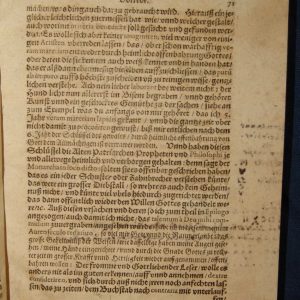
Oh no, dear laborer, by no means: the stone lies buried in filth, and art and a skilled mind are required for the matter. Behold the temple, what you hear from the beginning: I had the veram materiam lapidis (true matter of the stone) for five years, and for the whole time did not know how to proceed with it, until finally, after the sixth year, the key of power was entrusted to me through secret revelation from God Almighty. Now the old Patriarchs, Prophets, and Philosophers have always and in every way kept this key secret and hidden.
For the Monarcha says in the cited place: if they had written it openly so that every cobbler or tooth-puller could understand it, that would be a great theft; then it would also be no secret, and much evil could be done with it, which would be openly against the will of God, etc. For these reasons, and some of which are mentioned in the Epilogue, and so that I may not be accused of burying the talent entrusted to me by God, I have in this present ‘Aureum Seculum Redivivum’ (Golden Age Restored), as much as God and Nature have granted me, wanted to reveal the great secret of the Wise, as my eyes have seen it, my hands have prepared it, and through the grace of God, after great effort and heartache, have rightly completed it and taken it up again.
May the pious and God-loving Reader recognize, accept, and take it in good part, consider it rightly, and not let himself be irritated or troubled that sometimes, literally, contrary things appear; it could not be otherwise, nor was it proper, in proceeding from theory to practice. Because writing clearly and plainly about this is strictly and most highly forbidden in the republic of chemistry. But I have no doubt that all those who regard this little treatise in true confidence with the inner tongue of the mind (which can do all things), who study it diligently, and who above all things call upon God inwardly and from the heart, will, like me, enjoy the philosophical, wonderfully sweet fruits hidden herein and become partakers of them according to the will of God. And then they will be and remain true brothers of the Golden Cross and chosen members of the philosophical community in eternal alliance.
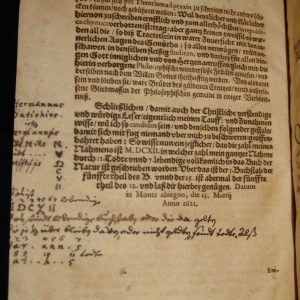
Finally, so that the Christian, sensible, and worthy Reader may also know my baptismal and surname, I will be so candid as to reveal it in the following manner, so that no one may complain about me. Now everyone should know that the number of my name is 1612. In this number, my whole name is completely written in the Book of Nature through two dead and seven living letters. Or, that is the letter, or the fifth part of the 25th, and the 15th is again the fifth part of the 12th. And be content with this. Given on the Mountain of Fir Trees, the 25th day of March, in the Year 1621.
*
Dedication
To the Sons of Wisdom and Doctrine
*
THE GOLDEN AGE RESTORED
When I thought upon the wonders of the Most High, upon the secrets of locked Nature, and upon the fiery and fervent love of the Highest: then I remembered Reuben’s harvest, in which Leah’s son found the mandrakes which Leah gave to Rachel for sleeping with the patriarch Jacob, and they were found in the field. But my thoughts were very deep and carried me further to consider how the molten golden calf of Aaron was made potable, in that he burned it with fire, ground it to powder, strewed it upon water, and gave it to the children of Israel to drink. That I, too, marveled greatly at this swift and artful destruction of the work of God’s hands.
(Note: Mandrakes (dudaim in Hebrew) were associated with love, fertility, and magical properties in biblical and alchemical tradition—symbolizing the magnetic attraction between Sol and Luna, the conjunction of opposites necessary for the Work).
But when I grasped my thoughts rightly, I recognized the truth, and my eyes were opened no differently than the two disciples at Emmaus, who recognized the Lord in the breaking of bread. And my heart burned within me, but I lay down again to speculate further, and fell asleep over it. And behold, King Solomon appeared to me in a dream with all his power, riches, and glory. He led beside him his entire women’s chamber: 60 royal queens, 80 concubines, but of virgins there was no number.
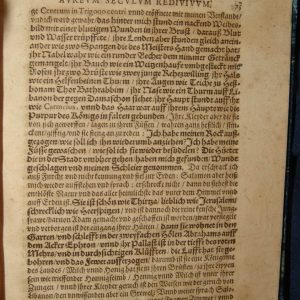
But one was his dove, his pure one, the most beautiful and dearest to his heart. And according to custom, they held a splendid procession, in which the Center was highly honored and loved, whose ointment was like poured-out balm, whose fragrance surpasses all spices, etc. And his fiery spirit is a key to open the temple, to go into the holy place, and to grasp the horns of the altar. After the procession was completed, however, Solomon showed me the unique Center in the Triangle of the Center, and opened my understanding. And I became aware that behind me stood a naked female figure with a bleeding wound in her breast, from which blood and water dripped. Her thighs, however, stood together like two clasps which the master’s hand has made. Her navel was like a round cup which never lacks drink. Her belly was like a heap of wheat set about with lilies. Her two breasts were like two young roe deer twins. Her neck was like an ivory tower. Her tongue was like the pools in Heshbon, by the gate of Bath-rabbim. Her nose was like the tower of Lebanon which looks toward Damascus. Her head stood upon her like Carmel, and the hair on her head was like purple of the king bound in folds. But the garments she had thrown off lay at her feet; they were utterly foul, stinking, and poisonous. And she began to speak:
‘I have taken off my robe; how shall I put it on again? I have washed my feet; how shall I defile them again? The watchmen who go about the city found me, struck me, and took my veil from me‘.
Then I was frightened out of my sleep and without delay fell to the earth. But Solomon raised me up again and said:
‘Fear not, for you see Nature laid bare, and the most secret thing that is under heaven and on earth. She is beautiful as Tirzah, lovely as Jerusalem, terrible as an army with banners. And yet she is the pure, chaste virgin from whom Adam was made and created. Sealed and hidden is the entrance to her chamber, for she dwells in the garden and sleeps in the double cave of Abraham, in the field of Ephron. Her palace is in the depths of the Red Sea and in translucent waters. The air has borne her, and the fire has raised her. Therefore she is a queen of the land. Milk and honey are under her tongue. Yes, her lips are like dripping honeycomb; honey and milk are under her tongue, and the smell of her garments is like the smell of Lebanon to the wise, but to the ignorant an abomination’.
And further Solomon spoke:
‘Awaken, behold all my women’s chamber, and seek one like her’.
And immediately the whole women’s chamber had to disrobe with honor. I sought, but my thoughts could not judge, and my eyes were held so that I did not recognize them.
But when Solomon noticed my weakness, he separated his women’s chamber from this naked female figure and spoke:
‘Your thoughts are vain, and your understanding is burned by the sun, and your memory is black as night, so that you cannot judge rightly. Only if you do not squander your affairs and will take the opportunity at hand—namely, that this naked virgin’s bloody sweat and sweat-like moisture may refresh you again, purify your understanding and memory completely and perfectly, so that your eyes may recognize the great deeds of the Most High. The height of the highest, the depth of the lowest, and the foundation of all Nature, the power and effect of all elements, you will investigate clearly. Your understanding will become silver, and your memory golden. All colors of the rainbow will appear before your face, and you will know their birth and separate the good from the evil, the goats from the sheep. Your life will be rest, but the bells of Aaron will awaken you from sleep, and the harp of David my father from slumber‘.
But at this speech of Solomon, I became even more frightened and was exceedingly terrified, partly because of the majestic words, partly also because of the great pomp and glory of the present royal women’s chamber. And King Solomon took me by both hands and led me through a wine cellar into a secret but very splendid hall, where he refreshed me with flowers and refreshed me with apples. Its windows were of transparent crystal, and I looked through them. But he spoke:
‘What do you see?‘
I answered:
‘I see from this place into the previous chamber from which I came, and your royal women’s chamber stands on the left, and the naked virgin on the right side. Her eyes are redder than wine, her teeth whiter than milk, but her garments at her feet are more hideous, darker, and more unclean than the brook Kidron‘.
‘Choose one from all’, said Solomon, ‘for your beloved. I consider her and my women’s chamber equal, and as much as the loveliness of my maids pleases me, so little do her abominable garments frighten me‘.
And immediately the king turned and spoke very strangely with one of his queens. Now there was an old hundred-year-old housekeeper among them who wore a gray robe, a black cap on her head, set with shiny white pearls and lined inside with red taffeta, embroidered with blue and yellow silk and very artfully sewn through. The mantle was heightened with all kinds of Turkish colors and Indian figures. This old woman secretly winked at me and swore a solemn oath that she was the mother of this unveiled virgin; that she had borne her from her body, a chaste, pure, and hidden virgin, who until now had not wanted to endure the glance of any man. And although she had allowed herself to be used among the peoples everywhere in the streets, yet no man had ever before seen her naked, nor had any touched her. For she was the virgin of whom the prophet speaks:
‘Behold, we have a secretly born son, who is transformed among others. Behold, the virgin has given birth to such a virgin who is called Apodorosa, that is, hidden, who cannot tolerate the other‘.
But because this her daughter was still unmarried, she had the bridal treasure lying under her feet on account of the present danger of war, so that she might not be robbed by a raiding horde and deprived of the splendid riches. I, however, should not let myself be deterred by the hideousness of the unsightly garments, but rather choose her daughter before all others for my love and life’s delight. Then she would give and reveal to me a lye to purify her garments. So would I obtain a flowing salt, and an incombustible oil for my household, and an ungraspable treasure. Her right hand would hold me constantly, and her left would always lie under my head.
And when I wanted to declare myself categorically upon this, Solomon turned again, stared at me, and spoke:
‘I am the wisest on earth. Beautiful and delightful is my women’s chamber, and the glory of my queens surpasses the gold of Ophir. The adornment of my concubines outshines the rays of the sun, and the decoration of my virgins outshines the moonlight. So heavenly are my maids, and so profound is my wisdom, and so unshakable is my understanding‘.
Then I answered and bowed, half frightened:
‘Behold, I have found grace in your sight. Since I am poor, give me this naked virgin, whom I alone have chosen for the preservation of my life. Her garments are indeed soiled and torn, but I will purify them and love her from my heart. She shall be my sister, my bride, for with her eyes she has wounded me, and with one lock of her hair she has taken my heart, made me ardent, so that I languish for love‘.
And immediately Solomon gave her to me, and there was a murmuring in the women’s chamber, so that I awoke from it and did not know what had happened to me. Nevertheless, I considered it a dream and had all kinds of subtle thoughts about it until morning.
But when I arose and had done my prayer, behold: there I saw the naked virgin’s garments lying before my bed, but not her. And I began to feel anxious and uneasy, and all my hair stood on end, so that cold sweat ran down my whole body. Yet I took heart, recalled my dream, and pondered it in the fear of the Lord. However, my thoughts could not fathom it. For these reasons, I did not dare to inspect the garments, much less to recognize anything within them. Instead, I changed my bedchamber and let the garments lie there for a considerable time, out of mere ignorance, thinking that if I perhaps touched or turned them, something remarkable might happen to me. But in my sleep I was severely poisoned and inflamed by the stench of the garments, so that my eyes could not see the time of grace, nor my heart recognize the great wisdom of Solomon.
After these mentioned garments had lain in my bedchamber for five years, and I did not know what to do with them, I finally thought to burn them to remove the stench. And as I spent the whole day occupied with such thoughts, the next night the old hundred-year-old woman appeared to me in a dream and spoke to me very harshly as follows:
‘You ungrateful man! For five years now I have entrusted my daughter’s garments, under which her most precious jewels are hidden, to you, and you have neither purified them nor aired them out because of the moths and worms. And on top of all this, you now finally want to burn the garments with fire. Is it not enough that you are a cause of the death and ruin of my daughter?‘
Then I became somewhat hot-headed and answered her:
‘How shall I understand this? Do you want to make a murderer of me? In five years I have not seen your daughter with my eyes, nor heard the least thing from her. How then can I be a cause of her death?‘
‘It is all true. However, you have sinned against God. Therefore my daughter could not become your portion, nor could the philosophical lye I promised you for washing and purifying her garments be realized. For as at first, when Solomon willingly gave you my daughter and you had an abhorrence for her garments, the planet Saturn (who is her grandfather) became angry and, out of pure wrath, transformed her again into what she was before her birth. And thus, through your contempt, you have angered Saturn and caused her death, decay, and final ruin. For she is the very one of whom Senior says:
‘I well bring myself a naked woman; when my first body was innocent, and I had not yet become a mother, until I was born a second time; then I bore the root power of all herbs; in my being I became victorious,’ etc.
(Note: Senior refers to Zadith Senior, the Latin name for Muhammad ibn Umail, a 10th-century Arabic alchemist whose ‘Tabula Chemica’ was widely influential in European alchemy).
Such and similar heart-breaking words seemed very strange to me. Yet I restrained my zeal as much as humanly possible. Nevertheless, I solemnly protested against this, that I knew nothing of her daughter, much less of her death, decay, and ruin. Indeed, I had kept her garments in my bedchamber for five years, but because of great blindness I could not recognize them nor devise their meaning, and therefore I was innocent before God and everyone.
This my justified, well-founded excuse did not displease the old woman. She looked at me and spoke:
‘I perceive and notice from your sincere conscience that you are innocent, and your innocence shall be richly and well rewarded. Therefore I will reveal to you from a good heart and in secret, namely: that my daughter, out of special love and affection for you, has left you among her remaining garments a little gray, worm-eaten casket as an inheritance, which is covered with a coarse, black, foul coating‘.
And with that she gave me a glass of lye and continued speaking.
‘This little casket you shall thoroughly purify from the stench and foulness it has contracted from the garments. For this you need no key; it will open itself. And you will find within it two kinds of things: a little white silver vessel full of splendid, artfully cut and polished, brilliant diamonds; and also a golden piece set with solar rubies. And this is the treasure and whole inheritance of my blessed daughter, which she bequeathed and left to you before her transformation and departure. Now if you artfully combine this treasure, purify it most highly, and in silence, yet with great patience, enclose it in a warm, hidden, vaporous, transparent, and moist vessel, and protect it from frost, wind, hail, sudden lightning, hot thunderbolts, and other external destruction until the wheat harvest, then you will first experience and become partaker of the great joy of the inheritance‘.
And with that I awoke again. And behold, I called anxiously upon God that He would open my understanding to seek the little casket which had been promised and assured to me in the dream. After finishing my prayer, I sought with the highest diligence and desire among the garments, and found it. But the coating was so firmly closed around it and naturally grown on that I could not remove it. For it would neither let itself be purified with the lye, nor be forced apart with iron, steel, or other tools. So I left it standing again and did not know what to do with it. I considered it sorcery and thought of the saying of the prophet:
‘And though you wash yourself with lye and use much soap, yet your iniquity stands out all the more before me, says the Lord God‘. (Jeremiah 2:22, paraphrased).
And another year passed during which, although I speculated and diligently pondered, I did not know how to remove the coating, until finally, to drive away melancholy thoughts, I went into a garden to stroll.
After a long walk, however, I sat down on a flint stone and fell fast asleep over it. But my heart kept watch. Then the old hundred-year-old housekeeper appeared to me again and spoke:
‘Have you received my daughter’s inheritance?‘
I answered with a sad grimace:
‘No. I have indeed found the little casket, but the coating from which it is to be separated is still completely impossible for me. The lye you gave me will not attack the coating’.
At this simple speech of mine, the old woman became angry and spoke:
‘Do you now want to eat mussels and crabs with the shells? Must they not first be ripened and prepared by the severe, raw fire of Vulcan? I said you should purify the little gray casket with the enclosed lye, which springs from it, and purify the innermost, not the outer raw coating. No, you must first burn that same coating with the fire of the Wise; then it will accommodate itself well‘.
And thereupon she gave me eight glowing coals bound in white linen, for further instruction and indication that I should make a philosophical and very artful fire from this and burn the coating. Then I would soon find the little gray casket. And instantly there arose a north wind and a south wind; both blew at once through the garden. Thereupon I awoke, cleansed my eyes from sleep, and became aware that the glowing coals wrapped in white linen lay at my feet. I seized them quickly and with joy, observed them diligently, called upon God, studied and labored day and night, constantly thinking of the noble and excellent saying of the Philosophers, where they say: ‘Ignis et Azoth tibi sufficiunt‘, ‘Fire and Azoth suffice for you‘.
(Note: Ignis et Azoth tibi sufficiunt: One of the most famous axioms of alchemy. Azoth is the universal solvent, the “water” that dissolves all metals—Mercury in its highest, spiritualized form; the name itself suggests the alpha and omega (A-Z) of the Work).
Concerning this, Ezra also says in the fourth book, chapter 5:
‘And he gave me a cup full of fire, and its appearance was like fire, and I drank it, and wisdom grew in me. And God gave me understanding, and my spirit retained memory, and my mouth was opened and no longer closed. And when forty days were completed, 204 books were finished, 70 alone for the wise, and they were worthy to read and were written in a secret script‘.
And I proceeded thus in silence and secrecy, as the old woman had revealed to me in the dream, until after a long time, according to the promise of Solomon, my understanding became silver and my memory golden. But after, following the instruction and honor of the old housekeeper, I had duly and very artfully enclosed and secured the treasure of her daughter—namely, the splendid, all-generating Lunar diamonds and the Solar rubies, which both sprouted and were found from one little vessel and from one landscape—I heard the voice of Solomon, which spoke:
‘My friend is white and ruddy, chosen from among ten thousand.( Song of Solomon 5:10-16, closely paraphrased). His locks are bushy, black as a raven. His tongue is like the tongue of doves by the water brooks, washed with milk, and standing in stillness. His cheeks are as the growing beds of spices of the apothecaries. His lips are like roses, dripping with flowing myrrh. His hands are as golden rings full of turquoises. His body is like pure ivory adorned with sapphires. His legs are as marble pillars set upon golden sockets. His appearance is like Lebanon, chosen as the cedars. His palate is sweet and altogether lovely. Such is my friend; my friend is such a one, O daughters of Jerusalem. Therefore you shall hold him and not let him go, until you bring him into his mother’s house, into his mother’s chamber‘.
And when Solomon had spoken these words, I did not know what to answer, but fell silent. Yet I had it in mind to open the enclosed treasure again, so that I might have peace and remain unmolested. Then I heard another voice:
‘I charge you, O daughters of Jerusalem, by the roes and by the hinds of the field, that you do not awaken nor stir up my beloved until she pleases. (Song of Solomon 2:7, 4:12, and various other verses woven together). For she is a garden enclosed, a spring shut up, a fountain sealed. She is the vineyard at Baal-hamon, the vineyard at En-gedi. The bed of spice beds, the mountain of myrrh, the hill of frankincense. The couch, the palanquin, the crown, the palm tree and apple tree, the flower of Sharon. O sapphire, turquoise, the tower, the tower of the watch, the pleasure garden, the garden spring, the spring of living waters. The daughters of princes, and the love of Solomon in delights. She is the dearest to her mother, and the chosen one of her mother. Her head is full of dew, and her locks full of night drops‘.
Through this speech and revelation I was so far informed that I recognized the goal of the Wise. I let the enclosed treasure stand untouched until, through the mercy of God, the working of noble Nature, and the labor of my hands, everything was happily completed.
Soon after this time, exactly on the day when the moon was new, there occurred an eclipse of the sun, which showed itself quite terribly. At first with dark green and somewhat mixed colors, until it finally became coal-black and darkened heaven and earth. Then people became anxious. But I rejoiced and thought upon the great mercy of God and the new birth, as indeed the little grain of wheat gives us indication from Christ Himself: that it must be cast into the earth and rot there, otherwise it brings forth no fruit. And it happened that the eclipse became covered with clouds, and the sun began to peek out. (Note :‘Except a corn of wheat fall into the ground and die, it abideth alone: but if it die, it bringeth forth much fruit‘. John 12:24). Nevertheless, three parts were still heavily darkened. And behold: an arm broke through the clouds, and my body trembled at it. It had a staff with four hanging seals in the hand, on which was written:
‘I am black but altogether lovely, O daughters of Jerusalem, as the tents of Kedar, as the curtains of Solomon.(Song of Solomon 1:5-6).Do not look upon me because I am black, because the sun has so burned me‘, etc.
But as soon as the fixed acted upon the moist, a rainbow stretched itself, and I thought upon the covenant of the Most High and upon the faithfulness of my Guide, and of Him who had rightly directed me. And behold: through the help of the planets and fixed stars, the sun overcame the eclipse, and over all mountains and valleys there arose a very lovely, bright day. Then all fear and terror had an end. And all who saw and experienced this day rejoiced in the Lord and spoke:
‘The winter is past, the rain is over and gone. The flowers appear on the earth; spring has come, and the turtledove is heard in our land. The fig tree and the vine have put forth their buds and give forth their fragrance. (Song of Solomon 2:11-13, 15). Therefore let us quickly catch the foxes, the little foxes that spoil the vineyards, so that we may drink ripe grapes pressed into wine, and at the right time be fed with milk and honey, that we may drink and be satisfied‘.
And after the day had declined and evening fell, the whole sky colored itself, and the Pleiades arose with yellow rays and ran their course beyond their natural path until in the morning they were overcome and overshadowed by the redness of the sun. And behold, the wise who dwell in the land rose from sleep, looked to heaven, and spoke:
‘Who is she that breaks forth like the morning red, beautiful as the moon, chosen like the sun, and there is no spot in her? (Song of Solomon 6:10). For her glow is fiery, and a flame of fire, so that many waters cannot quench love, nor floods drown it.( Song of Solomon 8:6-7). Therefore we will not let her go; she is our sister. And though she has become small and has no breasts, we will bring her again into her mother’s house, into a transparent hall where she was before, to suck her mother’s breasts. Then she will come forth like the tower of David built with bulwarks, on which hang a thousand shields and all kinds of weapons of the mighty‘.
And when she came forth, the daughters praised her, the queens and concubines praised her. But I fell down upon my face, thanked God, and praised His holy name.
*
EPILOGUE
For now, dear and true sons of wisdom and doctrine, in all watchfulness and glory, the great secret of the Wise and the revelation of the Spirit is completed, of which the Prince and Monarcha Theophrastus, in the Apocalypsis Hermetis, says:
‘That it is an eternal Numen, a divine, marvelous, and holy work, which embraces the whole world. In it resides the truth above all, and it truly transcends the elements and the fifth essence. No eye has seen, no ear has heard, no human heart has been touched by what heaven has naturally embodied in this spirit of truth. In it alone resides the truth; therefore, it shall be called the voice of truth’.
By the powers of which Adam and the other Patriarchs: Abraham, Isaac, and Jacob, had the health of their bodies and long life, and finally flourished in great riches. Through this spirit, the Philosophers discovered the seven liberal arts and obtained their riches thereby. Noah built the Ark, Solomon the Temple, Moses the Tabernacle with it; and through this spirit, golden vessels of pure gold were brought into the Temple, and for the honor of God, Solomon also performed many splendid works and many other great deeds.
Ezra re-established the Scriptures with it. Miriam, Moses’ sister, was generous with it. And this spirit was very customary and common among the Prophets in the Old Testament. Also, it is the healing and medicine of all things, and the final investigation, the last and highest secret of Nature. That is, the Spirit of the Lord, which fills the circle of the earth, and hovered over the water in the beginning. (Note: Genesis 1:2; Wisdom of Solomon 1:7). Which the world, without the secret, gracious inspiration of the Holy Spirit, or without secret instruction from those who know it, could not comprehend. For the whole world desires it because of its powers. It cannot be sufficiently valued by men.
The Saints have sought it from the beginning of the world and fervently desired to see it. For it governs the seven planets, elevates the mind, and dispels the clouds, gives all things their light, transforms everything into gold and silver, gives all health and freedom from sorrow, opens treasures, purifies metals, heals dropsy, gout, clarifies the sight, prolongs life, strengthens the sorrowful, makes the sick healthy, and heals all infirmities. Yes, it is a secret of all secrets, a secrecy of all secret things, and the healing and medicine of all things.
Also, it is a desirable knowledge and a corporeal thing of all things that are under the circle of the moon, with which Nature is strengthened, the heart and limbs renewed, blooming youth preserved, old age driven away, weakness destroyed, and the whole world renewed. It is and remains of an unfathomable nature, of an indescribable power, and of an invincible strength and glory.
Also, this spirit is an excellent spirit above all other heavenly things or spirits. It gives: health, fortune, joy, peace, love. It drives away all evil in general, destroys poverty and misery. It also causes one to be able neither to speak nor think evil. It gives a person what he desires in his heart: to the pious, temporal honor and long life; but to the evil who misuse it, eternal punishment.
And now, in the name of the Holy Trinity, with these few words, we will have most solemnly concluded and celebrated the great secret of the noble Philosophical Stone and the highest festival of the Wise.
To the Most High, Almighty God, who created this art, and who has also been pleased to reveal this knowledge to me, a wretched, sinful man, through a promised and fresh desire—to Him be eternal praise, glory, honor, and thanks, with all humble and fervent prayer:
May He so rule my heart, mind, and spirit through His Holy Spirit that I speak of this secret to no one, much less share it with the irreligious, nor reveal it to any single creature, so that I do not break my vow and oath, become a breaker of the heavenly seal and a perjured brother of the Golden Cross, offend the Divine Majesty in the highest degree, and thereby knowingly commit and perpetrate a mighty unforgivable sin against the Holy Spirit.
From this may God the Father, Son, and Holy Spirit, the highly praised Trinity, graciously protect me and steadfastly preserve me. Amen! Amen! Amen!
(Note: Mark 3:29; the ‘unforgivable sin’ against the Holy Spirit, here invoked as the ultimate consequence of betraying sacred knowledge).
FINIS
*
Follows some hand written notes:
Summa Artis Sophisticae
(Sum of the Sophistic Art)
Quinta Essentia Antimonii
(The Quintessence of Antimony)
This refers to the preparation of the Philosophical Stone from antimony (stibium, Sb)—a central operation in Basil Valentine’s ‘Triumphal Chariot of Antimony‘ (Der Triumph-Wagen des Antimonii, 1604) and related texts.
Vos fuga more Philologici…et erit lapis Phil.
(Do not linger, you philosophers, in the manner of Philologus, and so the Philosopher’s Stone comes to be)
INDEX-GLOSSARY
OF ALCHEMICAL-THEOSOPHICAL AND ESOTERIC TERMS
| Term | Latin/German Original | Definition in Context |
|---|---|---|
| Athanor | Athanor | The alchemist’s furnace, especially the digesting furnace for long, gentle heating; the ‘philosophical furnace‘ of the human body or of Nature |
| Azoth | Azoth | The universal solvent, the ‘water’ that dissolves all metals; Mercury in its highest, spiritual form; the alpha and omega (A-Z) of the Work |
| Benedicta / Blessed | Benedicta | Applied to Mercury or Water: that which has been consecrated, made spiritual, divinely inspired |
| Center / Centrum | Centrum | The heart of the matter, the essential point, the Stone itself; ‘Centrum in Trigono centri’ = the Center in the Triangle of the Center (Trinity) |
| Coagulation | Coagulatio | The process of making liquid solid; fixation of the volatile; one of the twelve operations |
| Cucurbit | Cucurbita | A gourd-shaped vessel, the ‘belly’ or ‘womb’ of the Work where putrefaction occurs |
| Dudaim / Mandrakes | Dudaim | Love-apples (Genesis 30); symbol of the magnetic attraction between Sol and Luna, or the conjunction of opposites |
| Ebhew | Ebhew | Obscure term in original; possibly Efeu (ivy) misread, or code for antimony |
| Fixation / Fixatory | Fixatio / Fixatorium | The process or vessel of making the volatile permanent; the ‘fixing’ of Mercury so it no longer flees the fire |
| Frater of the Three | Frater Der Drei | Trinitarian brotherhood; devotee of the Triune God |
| Gluten | Gluten | The viscous, binding substance; the philosophical glue that unites opposites; associated with the White Eagle (Luna) |
| Golden Cross | Crux Aurea / Güldenes Kreuz | The order or brotherhood of adepts; the completed Stone itself; the fraternity of illuminated physicians |
| Granum fundi | Granum fundi | ‘Grain of the ground/depths’—the seed of metals, the prima materia hidden in matter |
| Ignis et Azoth | Ignis et Azoth | ‘Fire and Azoth suffice for you’—the two agents of transmutation: Sulfur (fire) and Mercury (Azoth) |
| Lye / Lixivium | Lauge / Lixivium | The alkaline solvent, the philosophical water that washes and purifies the black earth |
| Mercurius Benedictus | Mercurius Benedictus | The ‘Blessed Mercury’—not common quicksilver, but the living water, the spirit of the world, the divine influx |
| Monarcha | Monarcha | The Prince or Sovereign—title of Paracelsus as ruler of alchemical wisdom |
| Nigredo | Nigredo / Schwarze | The blackening, first stage of the Work—putrefaction, dissolution, the eclipse; the death of the matter |
| Numen | Numen | Divine power, spiritual presence, godhead; the indwelling divine force |
| Peacock’s Tail | Cauda Pavonis / Pfauenschwanz | The iridescent colors appearing before whitening; the rainbow of promise; sign of approaching success |
| Pelican | Pelicanus | A vessel with a beak for circulation—the circular distillation of the matter upon itself |
| Prima Materia | Erste Materie / Prima Materia | The first matter, the chaos, the naked virgin, the old housekeeper’s daughter; the Saturnine lead from which the Stone is made |
| Quinta Essentia | Quinta Essentia | The fifth essence, the philosophical stone, the spirit of truth beyond the four elements |
| Red Lion | Roter Löwe | Sulfur, the masculine, fiery principle; the red tincture; the king |
| Reverberatory furnace | Reverberierofen | A furnace with an arched roof reflecting heat downward; used for calcination and gentle heating |
| Revivification | Revivificatio | The reanimation of the matter after mortification; restoration of spiritual life to the body |
| Rubedo | Rubedo / Röte | The reddening, final stage—perfection, the solar ruby, the red lion’s blood; the marriage of Sol and Luna |
| Saturn | Saturnus | Lead, the old man, the grandfather; the prima materia in its raw, heavy state; also the preserving/destroying power of time |
| Senior | Senior | Zadith Senior or Muhammad ibn Umail, legendary Arabic alchemist; author of the Tabula Chemica |
| Sophistical / Sophic | Sophistisch / Sophicus | Pertaining to Sophia (divine wisdom); not ‘fallacious’ but illuminated by wisdom |
| Sublimation | Sublimatio | Raising the matter by fire to purify it; spiritual elevation; one of the twelve operations |
| Tincture | Tinctura | The dyeing power, the transmuting virtue of the Stone; that which colors all metals gold |
| Trigonum centri | Trigonum centri | The Triangle of the Center—the Trinity, the three principles (Salt, Sulfur, Mercury), the threefold unity |
| Vera Materia | Vera Materia | The true matter—not common gold or mercury, but the philosophical mercury, the virgin’s blood and water |
| Vulcan | Vulcanus | The smith, the fire-worker; the fire of the Wise, controlled and graduated; not the common fire |
| White Eagle | Weißer Adler | Luna, the feminine, volatile principle; Mercury in its white, pure state; the queen |
Key to the Allegorical Figures
| Figure | Alchemical Identity | Symbolic Meaning |
|---|---|---|
| King Solomon | Sol (Sun, Gold) | The ‘perfected King’, sulfur, the male principle; wisdom and rulership |
| The Queenly Women’s Chamber | The metals, planets, intermediate stages | The many paths that are not the One Path |
| The Dove, the Pure One | Luna (Moon, Silver) | The chosen feminine, mercury purified, the white stone |
| The Naked Virgin with Bloody Wound | Nature unveiled, Mercurius philosophorum, the prima materia | The true matter hidden in putrefaction and suffering; Christ-like sacrifice |
| The Old Hundred-Year-Old Housekeeper | Saturn’s mother, the prima materia in its most ancient form, Chaos | The source from which all proceeds; time, lead, the grandmother of the Stone |
| The Daughter (the Virgin’s true self) | Mercury sublimed, the hermaphrodite, the reborn matter | The philosophical child, the Stone in formation |
| The Gray, Worm-Eaten Casket | The vessel of putrefaction, the philosophical egg | The container of transformation |
| The Black Coating | The body, the husk, the Saturnine shell | That which must be burned away by the fire of the Wise |
| The White Silver Vessel with Diamonds | Luna, the white stone, mercury fixed | The first perfection, the white tincture |
| The Golden Piece with Solar Rubies | Sol, the red stone, sulfur fixed | The final perfection, the red tincture |
| The Eight Glowing Coals in White Linen | The octonary, the philosophical fire, the eight operations or eight stages | The means of purification; fire preserved in purity |
| The Eclipse of the Sun | Nigredo, the great work of darkness | The necessary death before resurrection |
| The Rainbow | Peacock’s tail, the covenant, iridescence | Promise of success, the bridge between heaven and earth |
| The Pleiades with Yellow Rays | Citrinitas, the yellowing, the seven metals | The dawning of the gold, the sevenfold perfection |
*
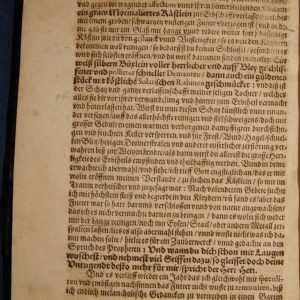
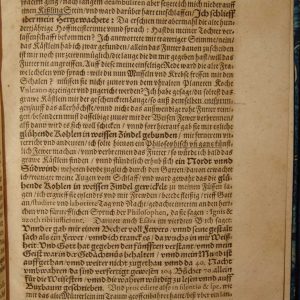
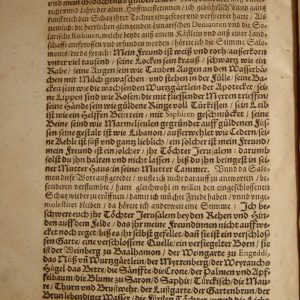
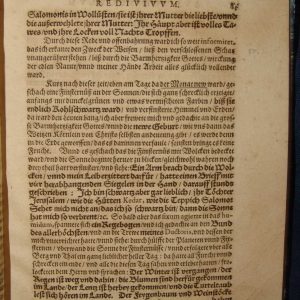
Original German
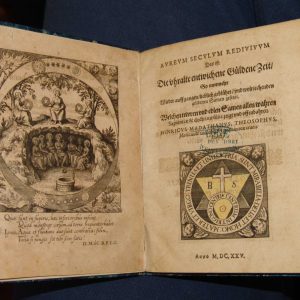
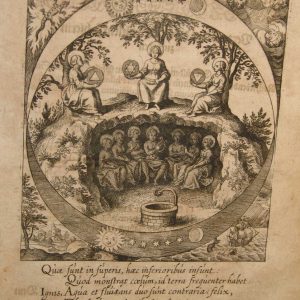
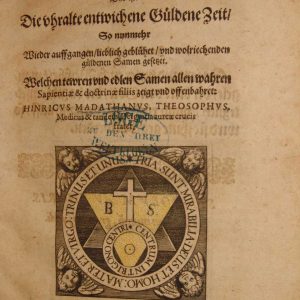
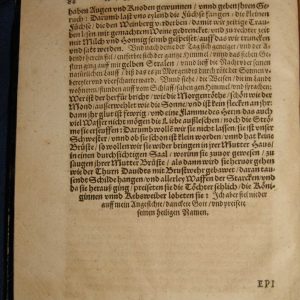
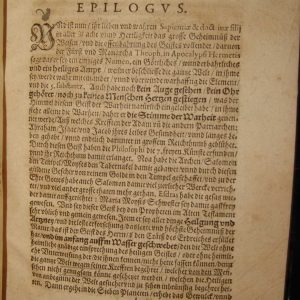
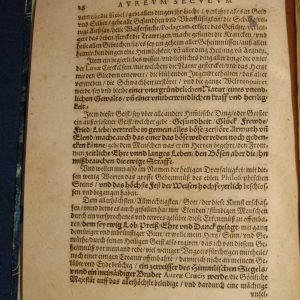
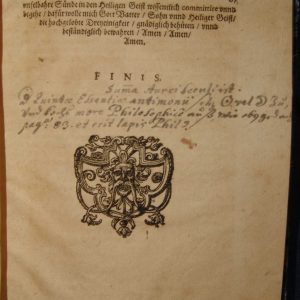
*
Source
‘Dyas Chymica Tripartita, Das ist:
Sechs Herrliche Teutsche Philosophische Tractätlein’.
*
Coming soon
A Little Hadrian von Mynsicht Sampler – Part 3:
Selections from the ‘Thesaurus et Armamentarium Medico-Chymicum‘.
***
Related Articles

Leave a Reply